
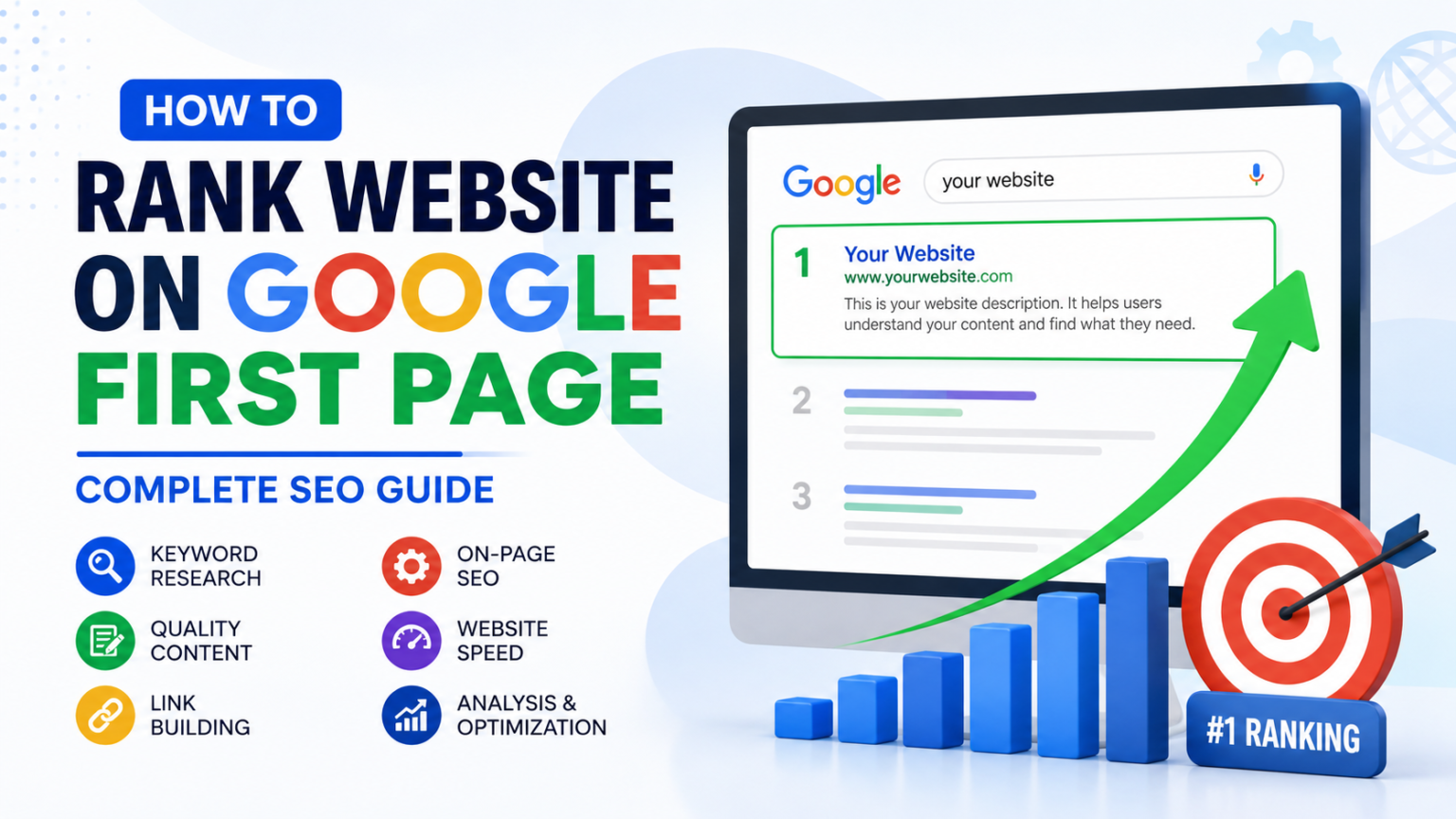
If you own a website, you’ve probably asked yourself this question at least once: how to rank website on Google first page? Whether you’re running a business website, an online store, or a personal blog, appearing on Google’s first page can bring more traffic, leads, and sales than almost any other marketing channel.
The reality is that most users never go beyond the first page of search results. If your website isn’t ranking well, you’re missing out on valuable opportunities to reach potential customers. The good news is that ranking higher isn’t about luck—it’s about following proven SEO practices consistently.
In this guide, you’ll learn practical Google search ranking tips, effective SEO strategies for higher rankings, and actionable ways to improve website visibility on Google without relying on shortcuts or outdated tactics.
Why Ranking on Google's First Page Matters
Google processes billions of searches every day. When users search for products, services, or information, they usually click on one of the top results. Studies consistently show that websites on the first page receive the majority of organic traffic.
This is why learning how to rank website on Google first page is so important. Higher rankings increase your website’s credibility, attract targeted visitors, and generate more business opportunities. Instead of paying for traffic through ads, SEO helps you earn traffic organically over time.
Understand How Google's Ranking System Works
Before implementing SEO techniques, it’s important to understand what Google wants. Google’s goal is simple: provide users with the most relevant and useful results for every search.
Google evaluates websites based on several factors, including:
- Content quality
- Keyword relevance
- Website authority
- User experience
- Mobile responsiveness
- Page speed
- Backlink profile
- Technical SEO
When your website performs well in these areas, Google is more likely to rank it higher. That’s why successful SEO focuses on creating value for users rather than trying to manipulate search engines.
Start with Smart Keyword Research
One of the most valuable Google search ranking tips is conducting proper keyword research before creating content.
Keyword research helps you understand exactly what your audience is searching for online. Instead of guessing topics, you can create content that matches real search demand.
When targeting how to rank website on Google first page, you should also include related keywords and search phrases naturally throughout your content. This helps Google understand the topic more comprehensively and improves your chances of ranking for multiple search terms.
Look for keywords that have good search volume but manageable competition. Long-tail keywords often provide faster ranking opportunities because they are more specific and less competitive.
Create High-Quality Content That Solves Problems
Content remains the foundation of SEO success. If you want to know how to rank website on Google first page, start by creating content that genuinely helps your audience.
Google rewards content that:
- Answers user questions
- Solves real problems
- Provides accurate information
- Demonstrates expertise
- Offers a positive reading experience
Instead of publishing short articles filled with keywords, focus on creating comprehensive resources that cover topics in depth.
One of the most effective SEO strategies for higher rankings is regularly publishing valuable content that users want to read, share, and reference. High-quality content naturally attracts backlinks, increases engagement, and improves search visibility.
Optimize Your On-Page SEO
Even great content needs proper optimization. On-page SEO helps search engines understand what your content is about and how it should rank.
Optimize Your Title Tag
Your title tag is one of the first things users see in search results. Include your primary keyword naturally and make the title compelling enough to encourage clicks.
Use Keywords in Headings
Adding keywords to H2 and H3 headings helps both readers and search engines understand your content structure.
Write an Effective Meta Description
A well-written meta description can improve click-through rates and attract more visitors from search results.
Create SEO-Friendly URLs
Keep URLs short, descriptive, and relevant to the page topic.
These optimization techniques may seem simple, but they are among the most important Google search ranking tips for improving visibility.
Improve Website Speed and User Experience
A slow website can hurt your rankings and frustrate visitors. Google considers page speed an important ranking factor because users expect websites to load quickly.
To improve website visibility on Google, focus on:
- Compressing images
- Using fast web hosting
- Reducing unnecessary scripts
- Enabling browser caching
- Optimizing website code
User experience also matters. Visitors should be able to navigate your website easily, find information quickly, and enjoy a smooth browsing experience.
The better the user experience, the more positive signals Google receives about your website.
Make Your Website Mobile-Friendly
Today, most searches happen on smartphones and tablets. Google uses mobile-first indexing, meaning it primarily evaluates the mobile version of your website.
If your site isn’t optimized for mobile users, ranking can become much more difficult.
A mobile-friendly website should:
- Load quickly on smartphones
- Display properly on all screen sizes
- Use readable fonts
- Have easy-to-click buttons
- Offer simple navigation
Improving mobile usability is one of the most practical ways to improve website visibility on Google and increase user engagement.
Build High-Quality Backlinks
Backlinks remain one of Google’s strongest ranking signals. When other reputable websites link to your content, it tells Google that your content is trustworthy and valuable.
Some effective backlink-building methods include:
- Guest posting
- Publishing original research
- Creating shareable resources
- Building industry relationships
- Digital PR campaigns
Among all SEO strategies for higher rankings, acquiring quality backlinks often has the greatest impact on competitive keywords.
However, focus on quality over quantity. A few authoritative backlinks are usually more valuable than hundreds of low-quality links.
Strengthen Your Technical SEO
Technical SEO ensures search engines can crawl and index your website effectively.
Important technical SEO practices include:
- Creating an XML sitemap
- Fixing broken links
- Using HTTPS security
- Improving crawlability
- Eliminating duplicate content
- Optimizing Core Web Vitals
Many website owners overlook technical SEO, but it plays a critical role in determining how well search engines understand your content.
Use Internal Linking Strategically
Internal links connect different pages on your website and help distribute authority throughout your content.
For example, if you publish multiple SEO articles, linking them together helps visitors discover additional resources while helping Google understand your site’s structure.
This simple technique supports better rankings and helps improve website visibility on Google over time.
Monitor Your SEO Performance
SEO is not a one-time activity. To continue growing, you need to monitor your performance regularly.
Track metrics such as:
- Organic traffic
- Keyword rankings
- Bounce rate
- Click-through rate
- Conversion rate
Analyzing these metrics helps identify opportunities for improvement and allows you to refine your strategy over time.
Many businesses that successfully learn how to rank website on Google first page achieve results because they consistently monitor and optimize their performance.
Frequently Asked Questions (FAQs)
1. How long does it take to rank a website on Google's first page?
SEO results vary depending on competition, website authority, and industry. Most websites start seeing noticeable improvements within 3 to 6 months, while competitive keywords may take longer.
2. What is the most important ranking factor in SEO?
High-quality content remains one of the most important ranking factors. However, backlinks, technical SEO, page speed, and user experience also contribute significantly to rankings
3. How can I improve website visibility on Google quickly?
To improve website visibility on Google, optimize existing content, improve page speed, target long-tail keywords, build quality backlinks, and ensure your website is mobile-friendly.
4. Are backlinks still important in 2026?
Yes. Backlinks continue to be a major ranking factor because they help establish authority and trust. Quality backlinks from relevant websites can significantly improve rankings.
5. What are the best SEO strategies for higher rankings?
The best SEO strategies for higher rankings include keyword research, content creation, on-page optimization, technical SEO improvements, internal linking, mobile optimization, and high-quality backlink building.