
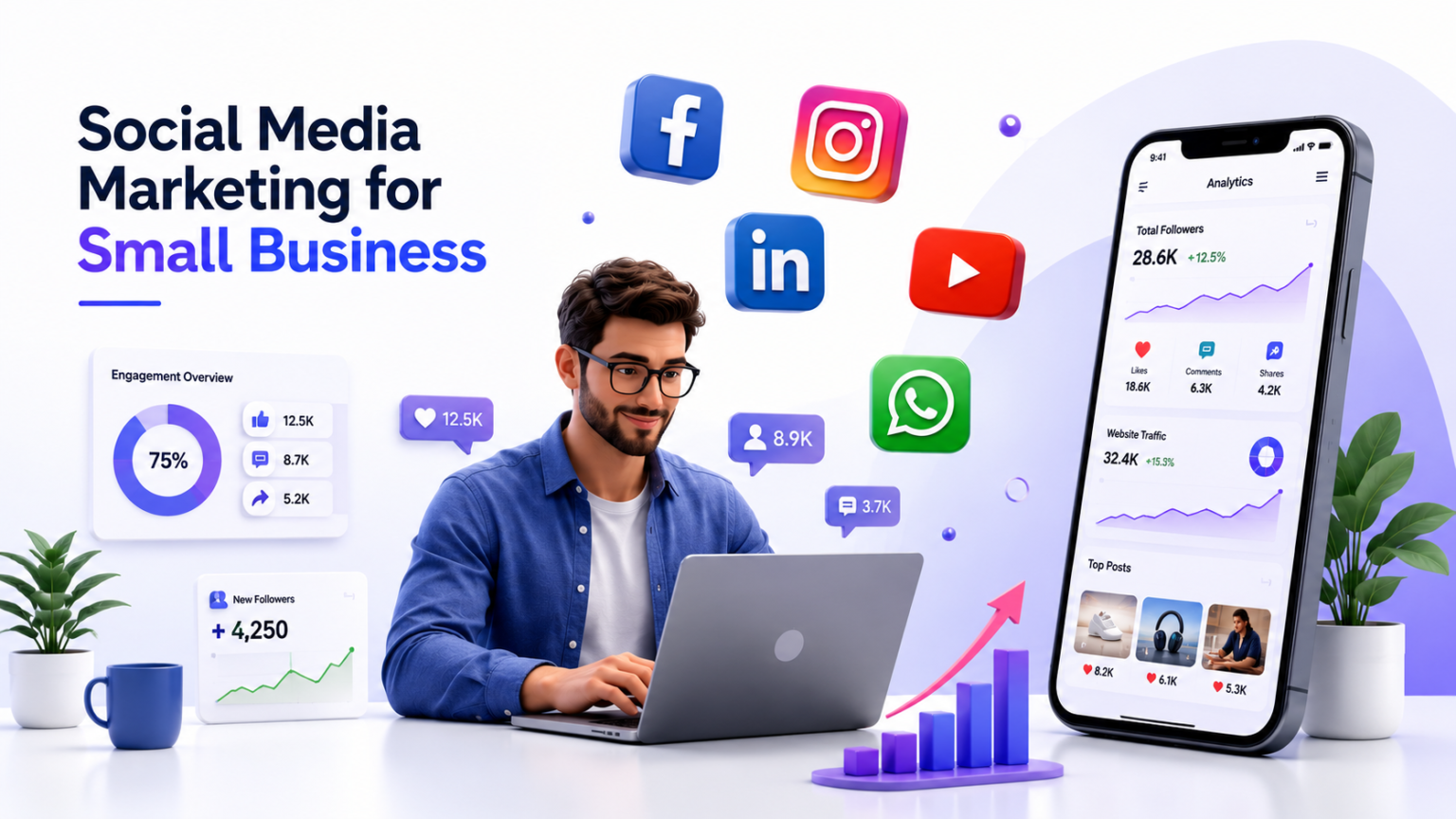
In today’s digital world, customers spend a significant amount of their time on social media platforms like Facebook, Instagram, LinkedIn, X (formerly Twitter), and YouTube. For small businesses, this presents a powerful opportunity to connect with potential customers, build trust, and increase sales. This is why Social Media Marketing for Small Business has become one of the most effective digital marketing strategies available today.
Whether you own a local business, startup, online store, or service-based company, social media allows you to compete with larger brands without spending a huge marketing budget. With the right strategy, even a small business can build a loyal audience and generate quality leads consistently.
In this guide, you’ll learn why Social Media Marketing for Small Business is important, its benefits, proven strategies, and practical tips to help your business grow.
What Is Social Media Marketing for Small Business?
Social Media Marketing for Small Business refers to using social media platforms to promote products or services, engage with customers, increase brand awareness, and drive business growth.
Unlike traditional advertising, social media marketing allows businesses to communicate directly with their audience. It helps companies build relationships, answer customer questions, receive feedback, and create a strong online presence.
Popular social media platforms include:
- YouTube
- X (Twitter)
- Threads
Each platform offers unique opportunities to reach different audiences and achieve specific business goals.
Why Social Media Marketing Is Important for Small Businesses
Many business owners believe social media is only for large companies. In reality, Social Media Marketing for Small Business provides an equal opportunity for businesses of every size.
Here are some reasons why it matters:
Increase Brand Awareness
Millions of people use social media every day. Regular posting helps your business become more visible and recognizable among your target audience.
Generate Quality Leads
Social media helps attract potential customers who are genuinely interested in your products or services. With the right content and advertising strategy, businesses can generate high-quality leads consistently.
Build Customer Trust
Customers prefer buying from businesses they know and trust. Sharing valuable content, customer testimonials, and behind-the-scenes updates helps establish credibility.
Improve Customer Engagement
Unlike traditional marketing, social media allows two-way communication. Businesses can respond to comments, answer questions, and build long-term customer relationships.
These advantages make Social Media Marketing for Small Business one of the most cost-effective marketing investments.
Benefits of Social Media Marketing for Small Business
Businesses that invest in Social Media Marketing for Small Business enjoy several long-term benefits.
1. Affordable Marketing
Compared to television, newspapers, or billboards, social media marketing is much more affordable. Even businesses with limited budgets can reach thousands of potential customers.
2. Better Customer Relationships
Regular interaction through comments, messages, polls, and stories helps businesses create stronger relationships with customers.
4. Higher Conversion Rates
Sharing blogs, product pages, and landing pages on social media drives targeted visitors to your website.
3. Increased Website Traffic
Businesses that actively engage with their audience often experience better conversion rates because customers become more confident in their brand.
5. Improved Search Visibility
Although social media is not a direct Google ranking factor, strong social signals help increase brand searches, website visits, and online authority.
Best Social Media Platforms for Small Businesses
Choosing the right platform is just as important as creating quality content.
Perfect for local businesses, community engagement, paid advertising, and lead generation.
Ideal for fashion, beauty, restaurants, travel, fitness, and lifestyle businesses that rely on visual content.
The best platform for B2B businesses, consultants, agencies, and professional services.
YouTube
Excellent for tutorials, product demonstrations, educational videos, and long-term brand building.
Works well for home décor, fashion, recipes, DIY projects, and eCommerce businesses.
Selecting the right platform ensures your Social Media Marketing for Small Business efforts reach the audience most likely to become customers.
Proven Tips to Improve Social Media Performance
Here are some practical strategies to make your social media marketing more effective.
Create Valuable Content
Focus on solving customer problems instead of constantly promoting products. Educational content usually performs much better than direct sales posts.
Post Consistently
Consistency builds trust and keeps your audience engaged. Create a monthly content calendar and stick to a regular posting schedule.
Use High-Quality Images and Videos
Visual content attracts more attention than plain text. Short videos, reels, and carousel posts often receive higher engagement.
Engage With Your Audience
Reply to comments, answer messages quickly, and interact with followers regularly. Engagement helps build stronger customer relationships and improves platform visibility
Track Your Results
conversions. These insights help improve future campaigns.
By following these best practices, Social Media Marketing for Small Business becomes more effective and delivers measurable business results.
Common Social Media Marketing Mistakes Small Businesses Should Avoid
Many businesses invest time and money in social media but fail to achieve results because of common mistakes. Avoiding these mistakes can significantly improve your Social Media Marketing for Small Business strategy
Posting Without a Strategy
Random posting without clear goals rarely delivers consistent results. Every post should have a purpose, whether it’s increasing brand awareness, driving website traffic, generating leads, or boosting sales.
Ignoring Customer Engagement
Social media is a two-way communication platform. If you ignore comments, messages, or reviews, customers may lose interest in your business. Responding quickly helps build trust and loyalty.
Focusing Only on Sales
People don’t visit social media platforms just to see advertisements. Instead of constantly promoting your products, share educational content, industry tips, customer success stories, behind-the-scenes videos, and helpful advice.
Inconsistent Posting
Posting once a month and disappearing for weeks can hurt your brand’s visibility. Consistency is one of the biggest factors in successful Social Media Marketing for Small Business.
Not Tracking Performance
Many businesses never analyze what works and what doesn’t. Review your analytics regularly to understand which content receives the most engagement and conversions.
Advanced Social Media Marketing Strategies
Once you’ve built a consistent social media presence, you can implement advanced strategies to accelerate business growth.
Not Tracking Performance
Short-form videos such as Instagram Reels, Facebook Reels, YouTube Shorts, and LinkedIn videos receive higher engagement than static images. Videos help explain products, showcase services, and connect with audiences more effectively.
Collaborate with Influencers
Partnering with local influencers or industry experts can help expand your reach and introduce your brand to new customers..
Run Targeted Advertising Campaigns
Organic growth is important, but paid social media advertising can significantly increase reach, leads, and sales. Platforms like Facebook and Instagram allow businesses to target audiences based on age, interests, location, and behavior.
Share Customer Testimonials
Positive reviews and success stories build trust. User-generated content also increases credibility and encourages potential customers to choose your business.
Repurpose Content
Turn one blog into multiple social media posts, reels, carousels, infographics, and short videos. Repurposing content saves time while maximizing reach across different platforms.
Future of Social Media Marketing for Small Business
The future of Social Media Marketing for Small Business is becoming more exciting with artificial intelligence, automation, and personalized customer experiences.
Some emerging trends include:
- AI-powered content creation
- Personalized marketing campaigns
- Interactive polls and quizzes
- Live video marketing
- Influencer collaborations
- Social commerce
- Chatbots for customer support
- Community-based marketing
Businesses that stay updated with these trends will have a competitive advantage and build stronger relationships with their customers.
Conclusion
Social Media Marketing for Small Business is no longer optional—it’s an essential part of building a successful brand in today’s digital world. Whether your goal is increasing brand awareness, generating quality leads, improving customer engagement, or driving more sales, social media provides affordable and measurable opportunities for growth.
Success doesn’t happen overnight. It requires consistency, valuable content, audience engagement, and continuous optimization. By creating helpful content, choosing the right platforms, monitoring performance, and adapting to new trends, small businesses can compete with larger brands and achieve sustainable growth.
If you’re looking to grow your business online, investing in a well-planned Social Media Marketing for Small Business strategy can deliver long-term results and help you connect with the right audience.
Frequently Asked Questions (FAQs)
1. Why is social media marketing important for small businesses?
Social media marketing helps small businesses increase brand awareness, connect with potential customers, generate leads, improve customer engagement, and grow sales with a relatively low marketing budget.
2. Which social media platform is best for small businesses?
The best platform depends on your target audience and business type. Facebook and Instagram work well for most local businesses, LinkedIn is ideal for B2B companies, and YouTube is excellent for educational and video content.
3. How often should a small business post on social media?
Most businesses should aim to post consistently, typically 3–5 times per week. The ideal posting frequency depends on the platform, audience behavior, and the quality of your content.
4. Can social media marketing increase website traffic?
Yes. Sharing valuable blogs, landing pages, product pages, and promotional content on social media can drive targeted visitors to your website and improve lead generation.
5. Should small businesses hire a social media marketing agency?
If managing social media becomes time-consuming or you want faster growth, hiring a professional agency can help create effective strategies, produce engaging content, run advertising campaigns, and achieve measurable business results.